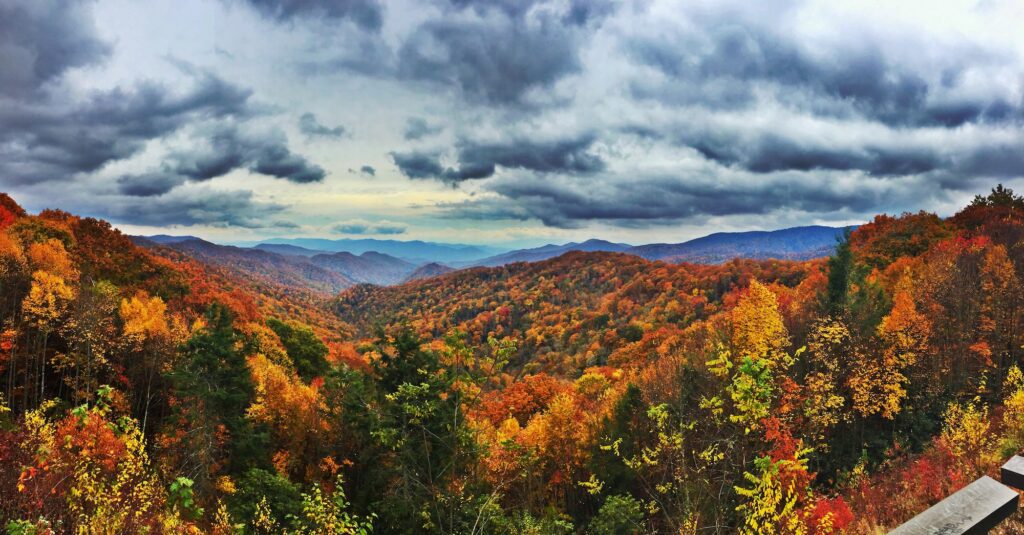
Fall color season is approaching in the North Carolina Smoky Mountains, bringing brilliant reds, oranges and golds to the mountains and valleys of Western North Carolina.
From the highest peaks of Great Smoky Mountains National Park and the Blue Ridge Parkway to mountain towns including Cherokee, Bryson City, Waynesville, Maggie Valley, Franklin, Highlands, Cashiers, Sylva, Dillsboro, Hayesville, Murphy and Andrews, fall foliage typically unfolds across the region from late September through early November.
And here’s the secret to planning a great fall trip to the NC Smokies: there isn’t just one peak week.
Because elevation and location play major roles in when leaves change, fall color begins at the highest elevations and gradually works its way down the mountainsides into lower-elevation towns and valleys. That creates weeks of opportunities to chase peak color across Western North Carolina.
Use our 2026 NC Smoky Mountains Fall Foliage Forecast below to help choose the best dates, elevations and destinations for your fall getaway.
You can also use this Interactive Fall Foliage Map to track the color changes in real time as we move into and through the Autumn weeks.
Helpful Tip: Bookmark This Page. We’ll be posting regular color updates throughout leaf season!
When Will Fall Colors Peak in the NC Smoky Mountains in 2026?
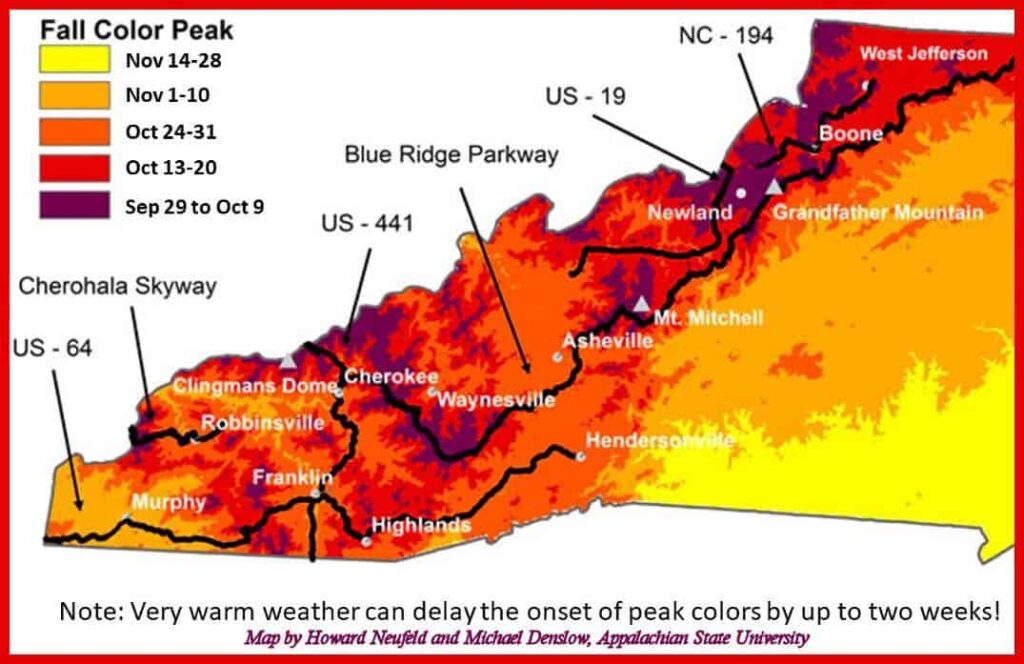
Fall color in the North Carolina mountains generally begins at the highest elevations in late September. During early and mid-October, peak color moves through elevations above 4,000 feet and then progresses into mid-elevation forests and mountain communities. By late October and early November, some of the best remaining color can often be found in the lower valleys of Southwestern North Carolina.
Weather can shift that timeline from year to year — and even from mountain to mountain.
For 2026, North Carolina State University forestry experts expect fall color conditions to vary across the state. Western North Carolina’s mountains have a more favorable outlook than some other parts of North Carolina, although drought conditions in portions of the region could affect the timing, intensity and duration of fall color.
The good news for leaf-peepers? With thousands of feet of elevation change across the NC Smokies, there’s usually beautiful fall color somewhere in the mountains throughout much of October.
2026 NC Smoky Mountains Fall Foliage Forecast
🍁 Late September–Early October: The Highest Peaks Begin to Glow
Best elevations: 5,000+ feet
The 2026 fall color show should begin at the loftiest peaks of Western North Carolina, where cooler temperatures arrive first.
By late September, look for the first patchy fall color at elevations above 5,000 feet. Color should become increasingly noticeable at high elevations during the first part of October.
Best places to explore:
- Kuwohi (formerly Clingmans Dome) — At 6,643 feet, the highest point in Great Smoky Mountains National Park offers expansive views across layers of mountain ridges. It’s one of the first places in the NC Smokies to begin showing fall color.
- Graveyard Fields & Black Balsam Knob — Located along the Blue Ridge Parkway near Mileposts 418–420, this high-elevation area combines mountain views, hiking trails and waterfalls with some of the region’s earliest fall color.
- Richland Balsam Overlook — Near Milepost 431 on the Blue Ridge Parkway, the overlook sits at 6,053 feet and is the highest point reached by the Parkway.
- Waterrock Knob — One of the Blue Ridge Parkway’s highest visitor areas, Waterrock Knob offers panoramic views across the mountains near Maggie Valley and Waynesville.
- Highlands-Cashiers Plateau — High elevations, waterfalls, mountain trails and scenic overlooks make the plateau an excellent destination for early-season color.
If you’re visiting during the first days of October, think high. Mountain summits, high-elevation sections of the Blue Ridge Parkway and exposed ridgelines are your best bets.
🍂 Early–Mid October: Color Spreads Across the Upper Mountains
Best elevations: approximately 4,000–5,000 feet
As October progresses, the fall color wave begins moving downhill.
This is when many sections of the Blue Ridge Parkway and higher-elevation areas surrounding Waynesville, Maggie Valley, Cherokee, Highlands and Cashiers begin putting on their autumn show.
Look for a mixture of green and changing foliage during this period, with increasingly vibrant pockets of yellow, orange and red.
Great places to look for color include:
- Blue Ridge Parkway near Waynesville and Maggie Valley
- Waterrock Knob and surrounding overlooks
- Great Smoky Mountains National Park
- Cherokee and the surrounding mountains
- Highlands and Cashiers
- Mountain roads and overlooks throughout Jackson County
- Higher elevations of the Nantahala National Forest
This part of October is especially good for scenic drives because elevation changes can reveal dramatically different stages of fall color in a relatively short distance.
🍁 Mid–Late October: Prime Time Across the NC Smokies
Best elevations: approximately 3,000–4,000 feet
By mid-to-late October, fall color is typically spreading across a much larger portion of Western North Carolina.
This is when many mountain communities, scenic highways, forests and river valleys begin reaching some of their most colorful days of the season.
Look for fall color around:
- Waynesville & Maggie Valley — Mountain roads, the Blue Ridge Parkway and nearby overlooks make Haywood County an ideal base for chasing fall color at several elevations.
- Cherokee — Combine fall foliage with scenic drives, hiking, cultural attractions and opportunities to see the elk that roam the area.
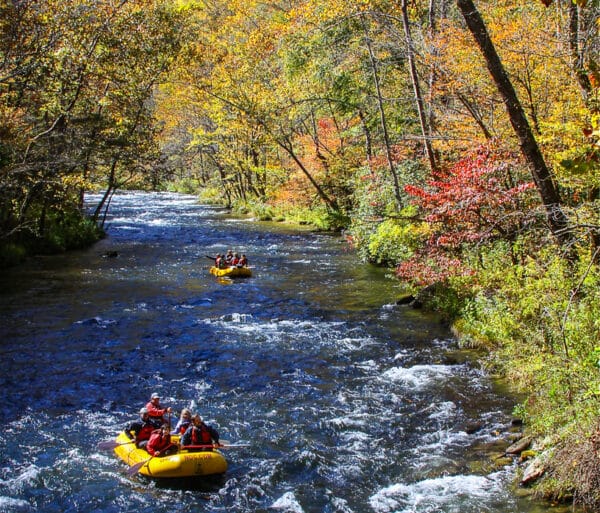
- Bryson City & the Nantahala Gorge — Follow the Tuckasegee and Nantahala rivers through colorful mountain scenery, or see the foliage from aboard the Great Smoky Mountains Railroad.
- Sylva & Dillsboro — Explore walkable downtowns surrounded by mountains, then head into the surrounding countryside for scenic drives and outdoor adventures.
- Franklin & Nantahala — The mountains surrounding Franklin offer excellent fall driving, hiking and overlooks, including Wayah Bald and miles of trails through the Nantahala National Forest.
- Robbinsville & Graham County — The Cherohala Skyway National Scenic Byway climbs from near Robbinsville into the high mountains along the North Carolina–Tennessee border, offering sweeping overlooks and dramatic changes in elevation that make it especially rewarding during fall color season.
- Highlands & Cashiers — Waterfalls, mountain overlooks and winding scenic roads provide plenty of ways to experience autumn on the plateau.
- Hayesville & Brasstown — Explore the quieter southwestern mountains, where lakes, valleys and Appalachian landscapes offer beautiful fall views.
If you’re planning a classic October leaf-peeping trip to Western North Carolina, this is one of the most versatile times to visit because color can be found across such a wide range of elevations.
🍂 Late October–Early November: Follow the Color Into the Valleys
Best elevations: lower mountain elevations and valleys
Think you missed peak fall color? Head lower.
As October comes to an end, the fall color show continues its journey into the lower elevations and valleys of Southwestern North Carolina.
This can be an especially beautiful time to explore areas around Franklin, Murphy, Andrews, Hayesville, Bryson City and other lower-elevation communities.
While some high-elevation trees may already be bare, lower mountain slopes can still be covered in color.
Try:
- Scenic drives through Murphy and Andrews
- The valleys surrounding Hayesville and Lake Chatuge
- Franklin and the Little Tennessee River Valley
- Lower elevations around Bryson City
- River corridors and valleys throughout the Nantahala National Forest
- Scenic backroads connecting the small towns of Southwestern North Carolina
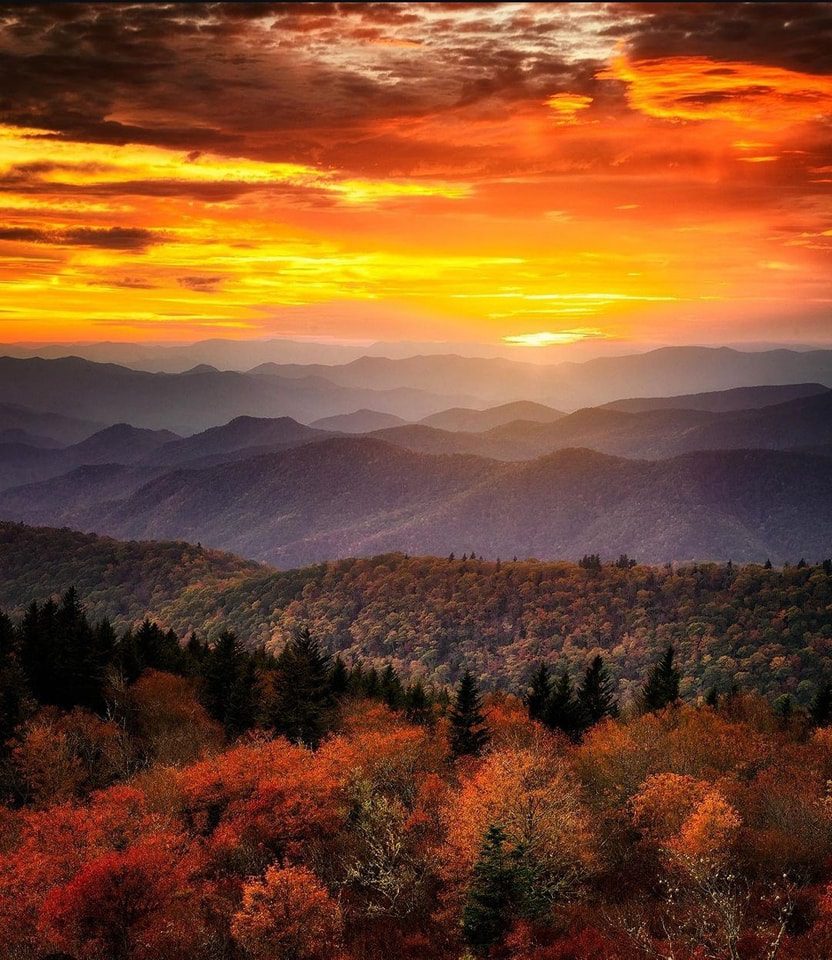
The contrast can be spectacular: bare or fading high peaks rising above hillsides and valleys still filled with gold, orange and red.
Best Places to See Fall Foliage in the NC Smoky Mountains
With so many elevations and landscapes packed into Western North Carolina, there are countless ways to experience fall. Here are some of our favorite places to start.
Great Smoky Mountains National Park
Fall color begins high in the Smokies and gradually descends toward the valleys, giving visitors an extended foliage season. Head toward Kuwohi for early color, explore mountain roads and overlooks as October progresses, or combine leaf-peeping with hiking, waterfalls and wildlife viewing.
Blue Ridge Parkway
Few roads are more closely associated with fall than the Blue Ridge Parkway. Overlooks, high-elevation ridges and constantly changing elevations make it possible to see multiple stages of fall color during a single drive.
Popular stops in the NC Smokies include Waterrock Knob, Richland Balsam, Black Balsam and Graveyard Fields.
Cherokee
Surrounded by Great Smoky Mountains National Park and the mountains of the Qualla Boundary, Cherokee combines brilliant fall scenery with Cherokee culture, outdoor recreation, fishing and wildlife viewing.
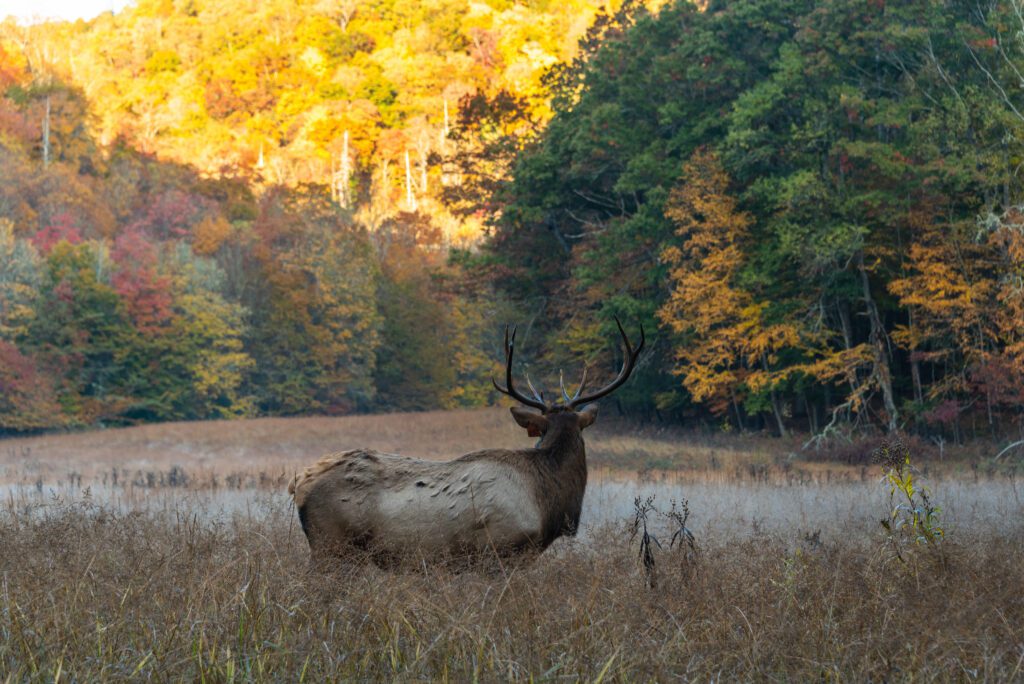
Fall is also an excellent time to watch for elk, particularly during the cooler morning and evening hours.
Graham County & Cherohala Skyway
For an unforgettable fall drive, head to Graham County and the Cherohala Skyway National Scenic Byway near Robbinsville. Connecting Western North Carolina with Tellico Plains, Tennessee, the Skyway climbs from lower valleys to elevations approaching 5,400 feet, creating opportunities to see different stages of fall color along a single scenic drive. Pull off at mountain overlooks for expansive views across the Nantahala and Cherokee National Forests, then explore nearby Lake Santeetlah and Joyce Kilmer Memorial Forest for even more autumn scenery.
Bryson City & Nantahala Gorge
Bryson City is surrounded by some of the most recognizable fall landscapes in the Southern Smokies. Drive into Great Smoky Mountains National Park, explore the Nantahala Gorge or let someone else do the driving aboard the Great Smoky Mountains Railroad.
Waynesville & Maggie Valley
With easy access to the Blue Ridge Parkway and mountain elevations ranging from valleys to high ridgelines, Waynesville and Maggie Valley offer plenty of opportunities to follow the progression of fall color.
Sylva & Dillsboro
Colorful mountains provide the backdrop for these neighboring Jackson County towns. Explore downtown shops and restaurants, follow scenic roads through the surrounding mountains or use the area as a base for exploring nearby waterfalls and trails.
Franklin & Nantahala
Franklin sits in a mountain valley surrounded by the Nantahala National Forest, making it a natural destination for a fall road trip. Wayah Bald offers panoramic mountain views, while the Appalachian Trail, Bartram Trail and nearby waterfalls provide plenty of opportunities to get outside.
Fall color around Franklin often peaks around mid-October, although elevation and weather conditions can move that timing earlier or later.
Highlands & Cashiers
High elevations make the Highlands-Cashiers Plateau one of the earlier areas in the region to experience fall color. Waterfalls, hiking trails, scenic overlooks and winding mountain roads make it particularly rewarding during October.
Hayesville & Brasstown
The mountains of Clay County offer a quieter way to enjoy fall in Western North Carolina. Explore mountain roads, enjoy the scenery around Lake Chatuge or visit Brasstown for Appalachian arts, culture and mountain landscapes.
Murphy & Andrews
Farther west, Cherokee County’s lower valleys help extend the fall color season. Murphy and Andrews make excellent late-October and early-November destinations for travelers following the changing leaves into the southwestern corner of North Carolina.
More Fun Things to Do While Leaf-Looking
Fall foliage may be the star of the show, but there’s plenty more to experience while you’re exploring the NC Smokies.
- Nantahala Outdoor Center – Bryson City: Add some adventure to your fall getaway with outdoor recreation in the Nantahala Gorge, or simply relax along the river and enjoy the surrounding mountain scenery.
- Harrah’s Cherokee Casino Resort – Cherokee: Pair your leaf-peeping trip with dining, entertainment and gaming in the heart of Cherokee.
- Great Smoky Mountains Railroad – Bryson City: See fall color from the rails as the train travels through river valleys and mountain scenery in Western North Carolina.
- John C. Campbell Folk School – Brasstown: Experience Appalachian arts and culture through traditional craft, music, dance and classes in the mountains of Clay County.
- Plateau Playground – Highlands-Cashiers Plateau: Find hiking, climbing and outdoor adventures surrounded by the fall scenery of the Highlands-Cashiers Plateau.
How to Find the Best Fall Color During Your Visit
- Fall foliage doesn’t follow an exact calendar, so a little flexibility can make a big difference.
- Watch the elevation. If the highest mountains are past peak, head lower. If valleys are still mostly green, drive toward higher elevations.
- Pay attention to the weather. Sunny days and cool — but not freezing — nights generally provide ideal conditions for colorful foliage. Extended heat, drought, heavy rain and strong winds can all affect the timing and duration of fall color.
- Take a scenic drive. The Blue Ridge Parkway is famous for fall, but don’t overlook the scenic highways and backroads connecting Western North Carolina’s mountain communities.
- Check conditions before heading out. Weather, road conditions and temporary closures can change quickly in the mountains, particularly on high-elevation roads.
- Stay a few days. One of the advantages of visiting the NC Smokies is the dramatic range in elevation. Staying longer gives you time to explore different areas and find the best color.
2026 NC Smoky Mountains Fall Foliage FAQ
When will leaves peak in the Smoky Mountains in 2026?
There is no single peak date for the entire North Carolina Smoky Mountains region. The highest elevations generally begin changing in late September and early October. Peak color then progresses into mid-elevation areas during October before reaching lower mountain valleys in late October and early November. Weather conditions can shift those dates.
What is the best time to see fall colors in Western North Carolina?
October offers the widest range of fall color across Western North Carolina. Early October favors the highest elevations, mid-October brings color to many popular mountain destinations, and late October can be excellent in mid- and lower-elevation communities. Southwestern NC valleys can continue showing color into early November.
Where do fall colors start first in North Carolina?
Fall color typically begins first at the highest elevations of the North Carolina mountains. Places above 5,000 feet can begin showing patchy color in late September before the change gradually moves downhill.
What is the best week to see fall foliage in the NC Smokies?
There isn’t one perfect week for the entire region because elevations vary dramatically. Mid-October is a popular time because color is often visible across a broad range of mountain elevations, but travelers can find beautiful foliage from late September into early November by choosing destinations based on elevation.
Is October a good time to visit the Great Smoky Mountains?
Yes. October is one of the most popular times to visit the North Carolina Smoky Mountains because of fall foliage, cooler temperatures, scenic drives, hiking and seasonal events. Expect the busiest areas to draw larger crowds, particularly on October weekends.
Where can I see fall foliage without hiking?
You don’t have to hike to experience great fall color. Drive the Blue Ridge Parkway and other scenic mountain roads, visit overlooks, explore mountain towns or take a fall excursion aboard the Great Smoky Mountains Railroad. Many communities throughout Western North Carolina offer excellent foliage views right from town.
How long does fall foliage last in Western North Carolina?
Because of Western North Carolina’s dramatic elevation changes, the overall fall color season can stretch for more than a month. Color generally begins at the highest mountain elevations in late September and continues into lower southwestern valleys through late October and early November.
What are the best mountain towns for a fall trip in Western North Carolina?
Cherokee, Bryson City, Waynesville, Maggie Valley, Sylva, Dillsboro, Franklin, Highlands, Cashiers, Hayesville, Murphy and Andrews all offer access to fall foliage, scenic drives, outdoor recreation and mountain attractions. The best choice depends largely on when you visit and which elevations are showing the strongest color.
Follow the Fall Color Across Western North Carolina
One of the best things about fall in the NC Smoky Mountains is that the season doesn’t happen everywhere at once.
Start high in late September and early October. Follow the color down the mountains through October. Then head toward the valleys of Southwestern North Carolina as the season stretches into early November.
Whether you’re looking for a scenic drive along the Blue Ridge Parkway, a hike through colorful forests, a waterfall framed by autumn leaves, a train ride through the mountains or a relaxing weekend in one of Western North Carolina’s mountain towns, there’s always another way to experience fall in the Southern Smokies.
Bookmark this page and check back throughout the season. We’ll continue updating our 2026 NC Smoky Mountains Fall Foliage Forecast with current color conditions and recommendations for where to find the best leaves next.