
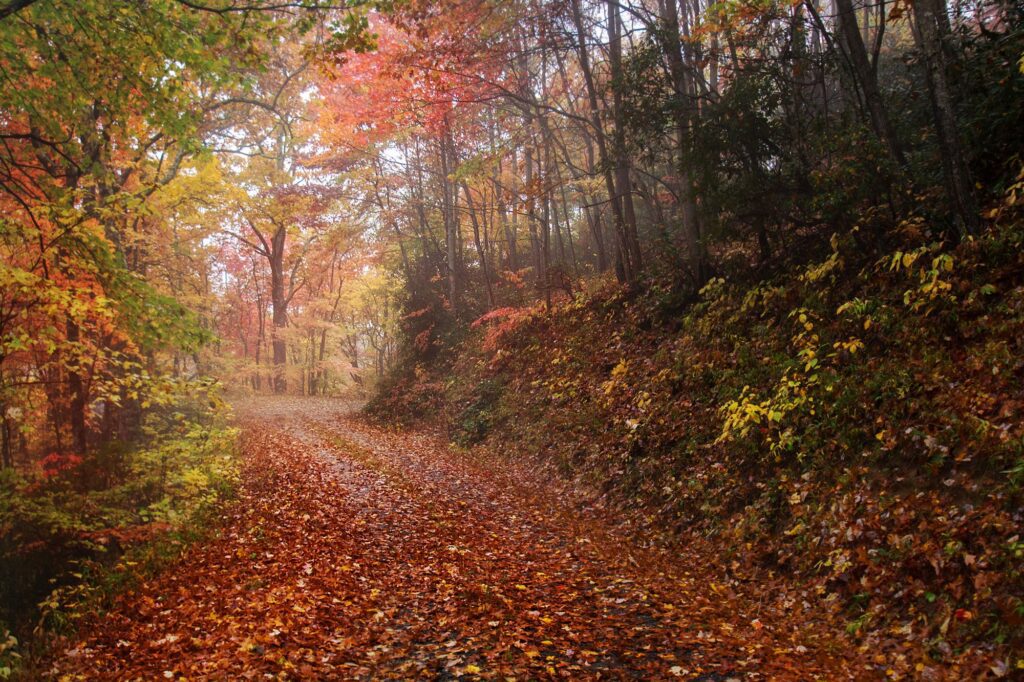
When fall arrives in the North Carolina Smoky Mountains, hiking trails become front-row seats to one of nature’s best shows. Brilliant reds, oranges and golds sweep across the mountains, transforming familiar overlooks, waterfalls and forests into something entirely new.
Better yet, fall color in Western North Carolina doesn’t happen all at once. With elevations ranging from high mountain peaks to lower valleys and foothills, autumn color typically progresses through the region over several weeks. Higher elevations often begin changing first, followed by mid-elevation forests and finally the valleys.
That means there’s plenty of time to lace up your hiking boots and find fall color somewhere in the NC Smokies.
From the Appalachian Trail near Franklin and old-growth forest near Robbinsville to waterfalls near Bryson City and a family-friendly riverside trail in Cherokee, here are some of the best hikes for experiencing fall foliage in Western North Carolina.
Appalachian Trail to Wesser Bald: A Mountain View Favorite
You don’t have to hike all the way from Georgia to Maine to experience the Appalachian Trail.
The legendary Appalachian Trail passes through Western North Carolina, including beautiful stretches of the Nantahala National Forest near Franklin and the Nantahala Gorge.
For a memorable fall hike, head to Tellico Gap and follow the Appalachian Trail toward Wesser Bald. The approximately 4-mile round-trip hike leads to the Wesser Bald observation tower, where the reward is a sweeping view across the surrounding mountains.
The structure you’ll find today isn’t the original fire tower. After the former tower was damaged, the remaining steel frame was converted into an observation platform through the efforts of the U.S. Forest Service and Nantahala Hiking Club.
Climb to the top and the reason for making this hike in autumn becomes immediately clear: ridgeline after ridgeline stretches into the distance, covered in changing hardwood forest.
It’s an especially memorable way to experience the Appalachian Trail without committing to a long-distance trek.
Best for: Mountain views and Appalachian Trail enthusiasts
Distance: Approximately 4 miles round trip from Tellico Gap
Area: Nantahala National Forest near Franklin
Andrews Bald: High-Elevation Fall Color
For big views from one of the highest points in Great Smoky Mountains National Park, head for Andrews Bald.
The hike begins at the Forney Ridge Trailhead near the Kuwohi parking area. Kuwohi, formerly known as Clingmans Dome, is the highest point in Great Smoky Mountains National Park and provides access to several high-elevation hiking experiences.
From the trailhead, hikers travel 1.8 miles to Andrews Bald, making this a 3.6-mile round-trip hike.
The trail descends through a high-elevation spruce-fir forest before reaching the grassy bald, where expansive mountain views open across the Southern Appalachians. The return trip involves a sustained uphill climb, so don’t let the downhill beginning fool you.
Because of its elevation, this part of the Smokies can begin showing signs of autumn earlier than communities in the valleys below. That makes Andrews Bald a particularly good option for visitors arriving toward the beginning of Western North Carolina’s fall color season.
Parking at Kuwohi can be extremely busy during peak visitation periods, so plan ahead, arrive early or consider available shuttle options.
Best for: High-elevation views and early fall color
Distance: 3.6 miles round trip
Area: Great Smoky Mountains National Park near Bryson City and Cherokee
Joyce Kilmer Memorial Forest: Walk Among Giants
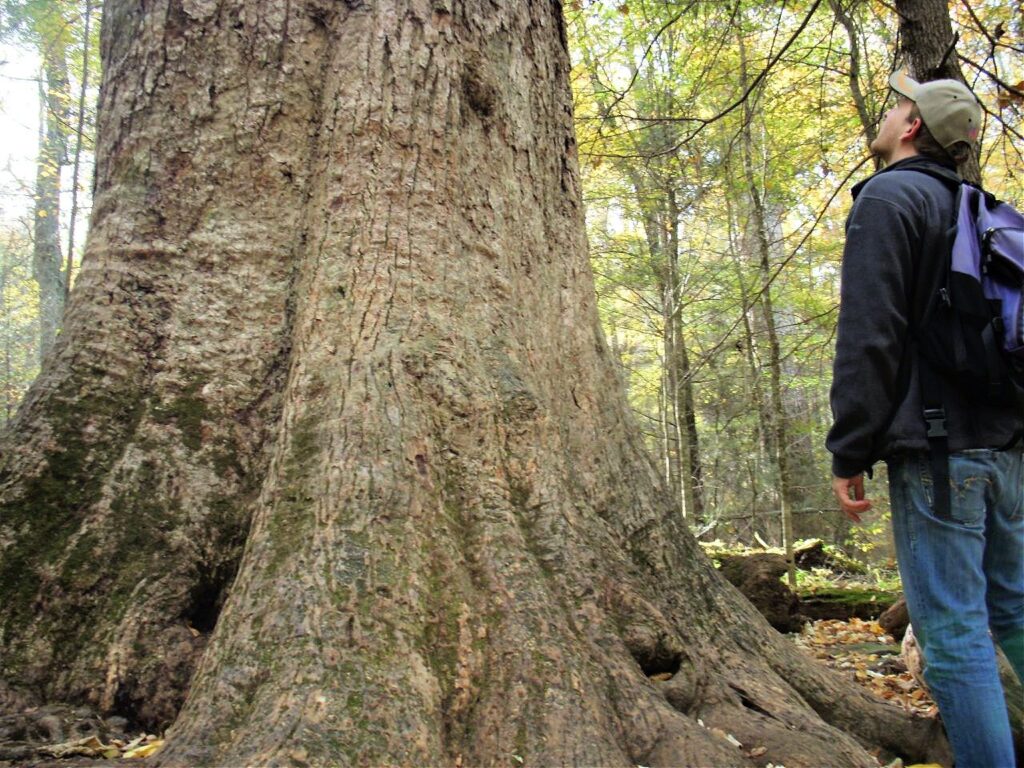
Some fall hikes are about reaching a panoramic overlook. Joyce Kilmer Memorial Forest is about looking up.
Located near Robbinsville in Graham County, this remarkable 3,800-acre forest protects one of the country’s most impressive remnants of old-growth forest.
The Joyce Kilmer Memorial Loop Trail is a roughly 2-mile, figure-eight route through a forest filled with enormous hardwoods. Some trees are more than 100 feet tall and 20 feet in circumference.
The lower loop leads past the Joyce Kilmer Memorial plaque, while the upper loop travels through Poplar Cove, home to some of the forest’s largest trees.
In fall, those towering yellow poplars are joined by oaks, beech, maples and other hardwoods in their autumn display. Instead of viewing fall foliage from miles away, you’re standing directly beneath it.
Don’t mistake the relatively short distance for a paved nature walk, however. Joyce Kilmer is part of a designated wilderness, and the trail can include rocks, roots, mud and steeper sections.
The reward is one of the most distinctive forest experiences in the NC Smokies.
Best for: Old-growth forest and immersive fall color
Distance: Approximately 2-mile figure-eight loop
Area: Near Robbinsville in Graham County
Deep Creek Waterfalls Loop: Three Waterfalls in One Hike
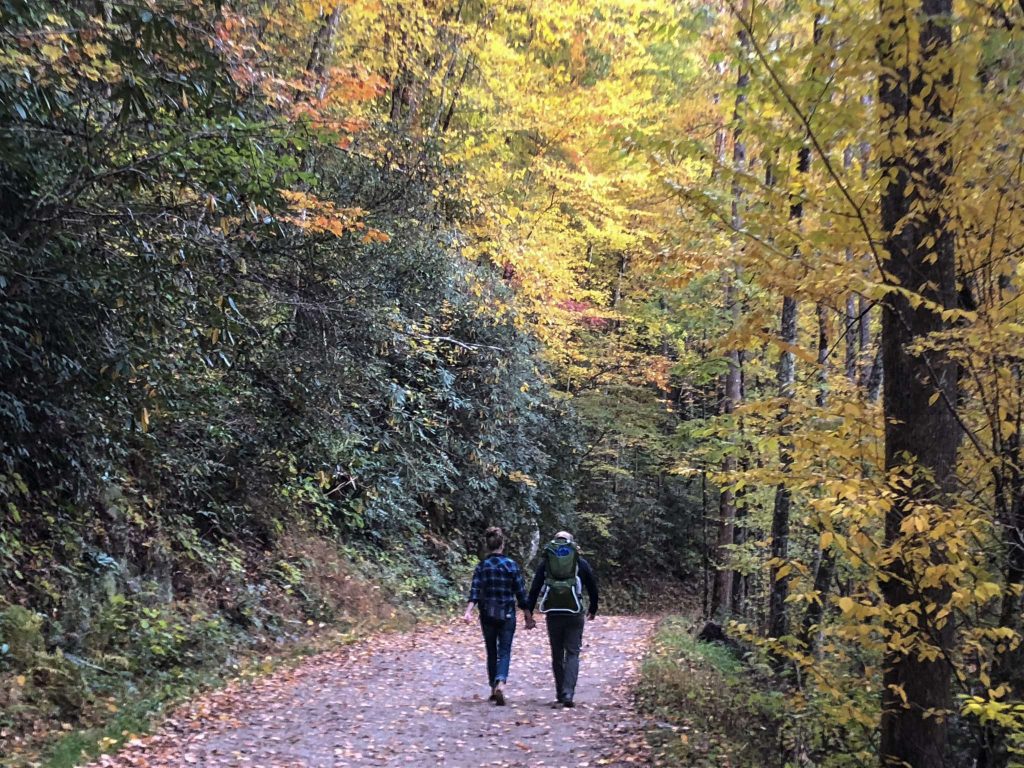
What pairs perfectly with fall foliage? Waterfalls.
The Deep Creek area of Great Smoky Mountains National Park, just outside Bryson City, gives hikers the opportunity to see three waterfalls on one 2.4-mile loop.
Beginning near the Deep Creek Campground, the route connects trails leading to Juney Whank Falls, Indian Creek Falls and Tom Branch Falls.
Along the way, the trail travels through a classic Southern Appalachian forest filled with hardwoods that bring yellows, oranges and reds to the landscape each fall. Add the rushing water of Deep Creek and its tributaries, and it’s easy to understand why this area is a favorite for photographers and leaf peepers.
Parts of the route include steeper sections, stairs, rocks and roots, so wear appropriate footwear.
After your hike, head into nearby Bryson City for lunch, shopping or another kind of fall adventure. The Great Smoky Mountains Railroad also departs from downtown Bryson City, offering scenic excursions through Western North Carolina’s mountain landscape.
Best for: Waterfalls and fall photography
Distance: 2.4-mile loop
Area: Great Smoky Mountains National Park near Bryson City
Oconaluftee River Trail: An Easy Fall Hike Near Cherokee
If you’re looking for an easier fall hike that works well for families, the Oconaluftee River Trail is one of the best choices in the Smokies.
Beginning at the Oconaluftee Visitor Center near Cherokee, the trail follows the Oconaluftee River through low-elevation hardwood forest toward the park boundary at the edge of Cherokee.
The approximately 3-mile round-trip trail is relatively flat, wide and graveled. Its gentle grade makes it stroller- and bicycle-friendly, and it is one of only two trails in Great Smoky Mountains National Park where leashed dogs are permitted.
During fall, the river provides a beautiful backdrop for the changing hardwood forest, with yellows, oranges and reds reflected in the water.
This area is also well known for elk. If you encounter elk or other wildlife, enjoy the experience from a safe distance. The National Park Service requires visitors to remain at least 50 yards away from elk.
The trail’s location also makes it easy to combine your hike with a visit to Cherokee and learn more about the history, culture and traditions of the Eastern Band of Cherokee Indians.
Best for: Families, easy walking, bicycles and leashed dogs
Distance: Approximately 3 miles round trip
Area: Oconaluftee Visitor Center and Cherokee
When Is the Best Time for Fall Hiking in the NC Smoky Mountains?
There isn’t one single “peak fall color” date for the entire North Carolina Smoky Mountains.
That’s part of what makes fall here special.
Elevation has a major influence on when leaves change. Higher elevations typically begin turning first, while lower mountain communities and valleys often hold onto their color later in the season.
In general, visitors can begin looking for color at the highest elevations in late September and early October. During October, color typically progresses down the mountains, with lower elevations often continuing their show into late October and early November.
Weather conditions affect the timing and intensity of color each year, so consider elevation as much as the calendar when deciding where to hike.
If color has passed at a high-elevation trail, head lower. If the valleys are still mostly green, head higher.
That’s one of the advantages of exploring fall in the mountains of Western North Carolina.
What Should You Know Before Fall Hiking in the Smokies?

Fall is one of the busiest and most beautiful seasons in Western North Carolina, so a little planning goes a long way.
Start early when visiting popular trails, particularly on October weekends. High-elevation destinations such as Kuwohi can experience extremely heavy visitation and limited parking.
Weather can also change quickly in the mountains. A warm afternoon in town doesn’t necessarily mean warm conditions at 5,000 or 6,000 feet. Bring layers, water and appropriate footwear, and check current weather, road and trail conditions before setting out.
If you’re hiking within Great Smoky Mountains National Park, remember that a parking tag is required when parking for more than 15 minutes. There is no general entrance fee to the park, but the parking-tag requirement applies at locations including Deep Creek, Oconaluftee and Kuwohi.
And wherever your fall adventure takes you, stay on designated trails and Leave No Trace so these forests remain just as spectacular for the next visitor.
Frequently Asked Questions About Fall Hiking in the NC Smokies
What are the best hikes for fall foliage in the North Carolina Smoky Mountains?
Some of the best fall hikes in Western North Carolina include Andrews Bald in Great Smoky Mountains National Park, the Deep Creek Waterfalls Loop near Bryson City, the Oconaluftee River Trail near Cherokee, Joyce Kilmer Memorial Forest near Robbinsville and portions of the Appalachian Trail in the Nantahala National Forest.
When do the leaves change in the NC Smoky Mountains?
Fall color typically begins at the highest elevations first and progresses toward lower elevations as the season continues. Visitors can often find changing leaves somewhere in the region from late September through October and, depending on weather and elevation, into early November.
What is an easy fall hike near Cherokee, NC?
The Oconaluftee River Trail is an excellent option. The approximately 3-mile round-trip trail is relatively flat and wide and follows the Oconaluftee River between the visitor center area and the edge of Cherokee.
Where can I hike to waterfalls near Bryson City?
The Deep Creek area of Great Smoky Mountains National Park is just outside Bryson City. The 2.4-mile Deep Creek Waterfalls Loop reaches three waterfalls: Juney Whank Falls, Indian Creek Falls and Tom Branch Falls.
Can I hike with my dog in Great Smoky Mountains National Park?
Dogs are generally not permitted on hiking trails in Great Smoky Mountains National Park. The Oconaluftee River Trail and Gatlinburg Trail are the two exceptions. Dogs must be kept on a leash.
Do I need a parking pass to hike in Great Smoky Mountains National Park?
If you park for more than 15 minutes, yes. Great Smoky Mountains National Park requires a parking tag for vehicles parked longer than 15 minutes. The park itself does not charge a general entrance fee.
Find Your Perfect Fall Hike in the NC Smokies
From mountaintop panoramas to old-growth forests and waterfall-filled valleys, there’s no single best way to experience fall in the North Carolina Smoky Mountains.
Hike high at Andrews Bald for sweeping views. Stand beneath centuries-old hardwoods at Joyce Kilmer Memorial Forest. Follow the Appalachian Trail to Wesser Bald. Chase three waterfalls at Deep Creek. Or take an easy riverside walk along the Oconaluftee near Cherokee.
Better yet, make a few days of it.
With mountain towns including Bryson City, Cherokee, Franklin and Robbinsville surrounded by public lands and scenic trails, you can follow fall color across Western North Carolina while discovering a different corner of the Smokies each day.
Explore more hiking trails, scenic drives, waterfalls, mountain towns and places to stay throughout the North Carolina Smoky Mountains as you plan your fall getaway.