When Hurricane Helene ravaged North Carolina, it left devastation across 27 counties. However, in an unexpected turn of events, the seven westernmost counties of the Smokies region—highlighted in this book’s fold-out map—emerged relatively unscathed, with damages that could be repaired. Meanwhile, our neighbors to the east faced a far more dire situation. Many locals from the Smokies region stepped up to help, embodying true heroism. We had the privilege of sitting with one of these heroes to hear their story.
Capturing Hope
Eric Haggart, marketing director for the Nantahala and Franklin Tourism Development Council and a seasoned photographer, found himself uniquely positioned to document the region’s response to the disaster. His lens captured not just the physical aftermath, but the indomitable spirit of the community.
We sat down with Eric to discuss his experiences during and after Hurricane Helene, his motivations, and his journey.
Hurricane Helene Experience
Q: Eric, can you describe your initial experience during Hurricane Helene and how your perspective changed as you ventured out to more affected areas?
A: Initially, I responded to the areas in and around Gerton and Bat Cave, NC, on search and rescue operations. Utilizing my Thermal Drone, as well as my other drones, I was able to plug in with the Gerton VFD and assist with river sweeps and reconnaissance that would have taken much more manpower than was available at the time. Because communications systems were down, most of the information we were receiving about damage and missing people was anecdotal and sometimes not accurate. Searching for the missing and survivors was intense and difficult due to the roads being damaged and, in many cases, completely washed away. As I came to interact with survivors, some of whom had lost everything, I began to see the strength and courage of the human spirit. Their positivity in the face of all the destruction was an inspiration to me and so many others who came into the area to help.
After my initial time in Gerton and Bat Cave, I transitioned up into areas of Yancey and Mitchell counties that had also suffered severe damage. Those areas were along the Cane, North Toe, and the Nolichucky rivers, respectively. I had plugged in with an organization of veterans to do similar search and rescue, wellness checks, and recovery as I had been previously. The amount of damage and the people affected were unbelievable at first. To see such a wide-reaching amount of damage and destruction spread out over hundreds of square miles was, at times, mind-numbing.
I spent the initial 6 weeks post-Hurricane Helene working alongside other volunteers searching for missing people. While in Yancey County, I met some of the locals who had survived and began talking with them about things that they needed. Immediate needs like food, water, and clothing were front of my mind, but I also planted some seeds of future needs with one community pastor in Ramseytown along the Cane River. I exchanged contact information with him and told him that I would be checking in with him and their needs in the coming days and weeks.
Q: You used your drone technology to assist locals in affected areas. Can you tell us more about how this technology proved useful in the aftermath of the hurricane?
A: About 6 months before Hurricane Helene hit the area, I purchased a Thermal Imaging Drone that allows me to pick up heat signatures of animals and people, as well as buildings, vehicles, and even trees. I had purchased the drone to assist with residents who had lost pets and livestock. I have searched for dogs, cats, horses, and cows. This drone also has a super telephoto lens that allows me to zoom in extraordinarily close to any objects that require further investigation. The thermal drone is also a tool that allows for night operations, giving 24 hours a day search ability to operations on the ground. I also have four other drones of different sizes that were also useful in other situations during search and rescue operations. One such drone is my FPV (First Person View) drone that is operational with goggles worn by me. The FPV drones are small and nimble and allow me to get into tight locations that aren’t ideal for larger drones, like low-lying riverbeds with heavy vegetation. Other instances were getting up close to vehicles and homes that had been washed away on riverbanks that were inaccessible to searchers. I could fly up to the windows of the vehicles or into buildings and perform a search without putting any SAR personnel in harm’s way.
Eric’s Motivations
Q: What motivated you to gather donations and provide help to those in need?
A: Seeing the devastation and needs of so many people up close and how it affected them prompted me to figure out what I could do to help. As I tried to figure out the best way I could get donations into the hands of those who needed them, my Facebook page came to mind. Having roughly 8,000 followers, I began to post the needs of people I had met while performing SAR. It became apparent almost immediately that people wanted to help, and I became an avenue for that. Initially, I had met a woman who lost her washer and dryer to the flood. I posted the need, and within 36 hours, I was able to deliver to her a brand-new washer and dryer. It was amazing. She was overwhelmed with the generosity of strangers. From there, I began numerous tasks, from acquiring grass seed and straw, tools, heaters, propane, sleeping bags, and so much more.
Another form of motivation came in the form of a girl’s bicycle. While I was working with SAR teams, I was also documenting conditions with my phone’s camera. One afternoon, I saw a handlebar of a bicycle sticking out of the rocks and sediment. With nothing more than a stick, I began to dig the bike out of the mess. Finally, after about 45 minutes, I was able to place the bike by a guardrail of a bridge. I took a couple of photos and left them there, hoping the owner of the bike would see them. A week or so later, I posted an album of photos explaining where I had been on my Facebook page. Shortly after came a comment about the bike and how they thought it was her daughter’s and that they had lost all their bikes, kayaks, and other outdoor equipment. I immediately got to work trying to figure out how to replace them. Once again, social media came to the rescue. With help from friends and followers, I was able to personally deliver a brand-new bike to their daughter and the rest of the family.
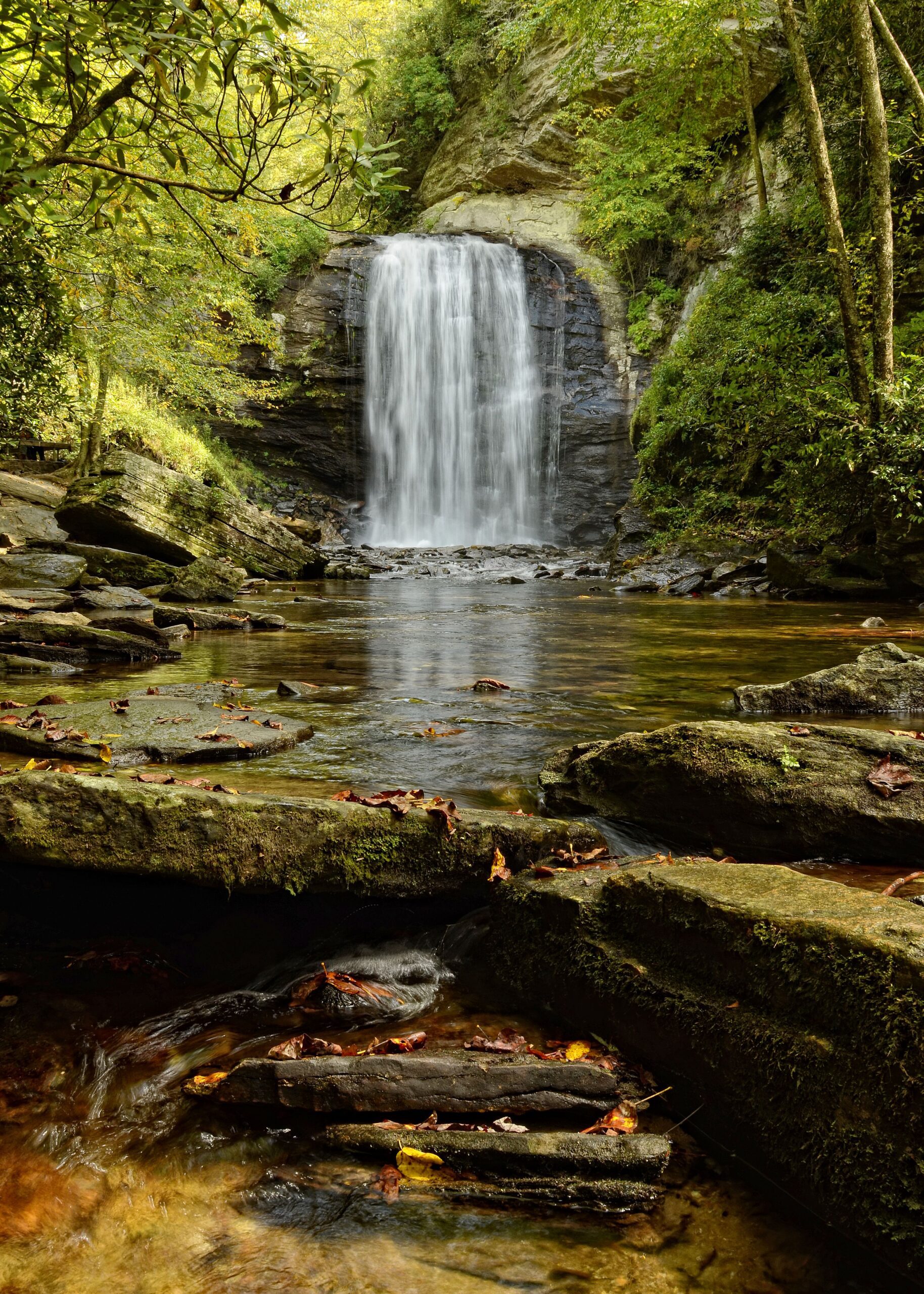
After Hurricane Helene
Q: How has this experience affected your perspective on community resilience in Western North Carolina?
A: Wow, that’s a big one. I have known for a long time that most folks in this area are resilient. They never fail to show up for one another in their time of need. Hurricane Helene was no exception. Seeing it up close and personally, though, showed me the true strength of those affected. Early on in Gerton, I was sitting on the concrete in front of the Volunteer FD waiting for another tasking, when a woman came up with a plate of food and her very large but very gentle dog. I offered to get her a chair. She politely declined and said she just wanted to sit here with other people and talk. I asked how she was doing, and her response was that of someone who had been through a lot. She explained how her house had been damaged but that she was still able to stay in it. She also said that thanks to Starlink and a generator, she was able to sit down and watch an episode or two of her favorite show. When I followed up with the only words I could think of at that moment, how having that ability was providing her with just a taste of normalcy in all of the chaos, she began to tear up and said, “Exactly”. She followed that up with how she’s not going anywhere and that all her friends who survived and lost so much more were not going anywhere either. Having that mindset while in the middle of the worst disaster to have ever hit the area was inspiring.
Q: As someone deeply involved in tourism and marketing for the area, how do you see the balance between supporting recovery efforts and encouraging visitors to return to the region?
A: Immediately following the storm, it was important for the worst-hit areas to be shut down, and all the efforts focused on search and rescue. In the areas surrounding the worst-hit locations, we were focused on being staging areas for the massive influx of volunteers making their way into the hardest-hit spaces. Tourism was not front of mind at that point. As the weeks pressed on, though, surrounding areas that were not affected by Hurricane Helene were wrestling with how to bring their tourism messaging back online in a way that was also sensitive to the worst-hit locations. One of the ways I sought to utilize tourism was to express how visiting an area close by but not affected by the storm was supporting recovery efforts. By having these visitors come into the region, their dollars spent were contributing to small businesses, employees, lodging, and restaurants, just to name a few. The money they were spending was allowing people to pay their bills, feed their families, and for businesses to remain open. Once the worst-hit areas of the region began to welcome visitors, it became even more important to promote tourism. I spent much of January traveling to Atlanta, Miami, and New York City advocating for tourism at trade shows and with travel writers. Not just for the area I work in, but also fielding questions about how recovery is coming along for the worst-hit locations. Tourism is an integral part of the recovery of the area and getting us back stronger.
Looking Ahead
Q: What’s next for you, Eric? How do you plan to use your skills and platform moving forward?
A: Since transitioning from SAR operations to more humanitarian relief efforts, I have been using my social media platform to raise money for communities. I held a photo print auction of some of my photography to raise money for the Ramseytown, Green Mountain, and Relief areas for a combined Thanksgiving/Christmas dinner for roughly 250 people. I also held another auction for an area in Swannanoa that helped provide Christmas gifts for over 45 families. I have found that people truly want to help but aren’t exactly sure how. In me, they have found a “boots on the ground” point of contact who is meeting the specific needs of victims in these areas. I am about to begin another fundraiser to purchase propane cylinders and fuel for heaters, as we are in the coldest days of winter right now. Going forward, I will keep adapting to the needs of those that I am helping. As their lives begin to turn the corner into recovery, I am agile enough to adjust what I am doing to meet those needs.
Q: Is there a message you’d like to share with the public about Western North Carolina in the wake of Hurricane Helene?
A: The immediate response from all over the country was incredible. A once in a hundred years flood devastated so many areas, but the people in Western North Carolina are strong, resilient, and they lift each other when the need arises. As the weeks have turned into months, volunteers have had to get back to their daily lives, and the news hasn’t kept up with how the recovery is coming along. The biggest message that I can share with the public is to please not forget that there are communities of people still hurting and in desperate need of help. It is not solely about financial contributions; there are numerous ways to assist and engage with individuals who require support. We need to be there for these folks who have lost so much for as long as they need us.
Q: How can people view/purchase your photography?
A: Folks can view my photography on my social media pages – they are Eric Haggart Imagery both on Facebook and Instagram. I invite people to follow along my photographic journey, and if you see a photo that you would like to purchase, please reach out to me directly on those pages or connect with me an email at [email protected].